
pureikyubu 1.9 — Release Notes
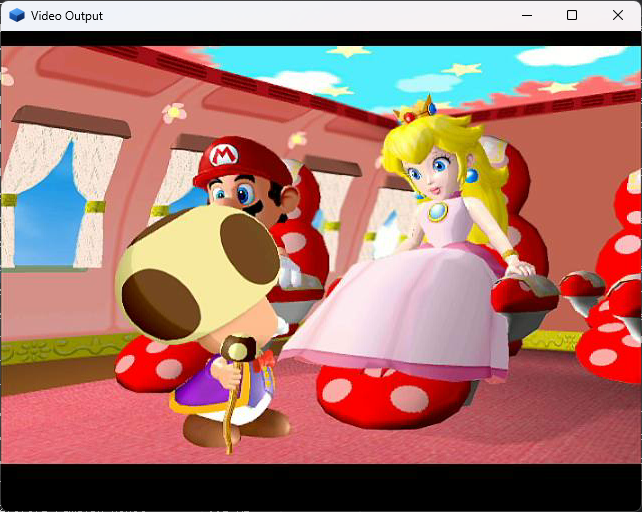
Version 1.9 is the feature release. The emulator gains a second machine — a from-scratch Game Boy Advance and Game Boy core — a second rendering path — a complete software implementation of the Flipper graphics blocks — and a new debugger, a local MCP server for LLM agents, a hardware-interface profiler, a headless build and a DSP recompiler. The whole source tree was audited for the data it loads, and the debug interface speaks UTF-8. On the compatibility side the Metroid Prime intro movie runs several times faster and the release reaches the game's title screen, Super Mario Sunshine boots and plays its intro, and titles such as Star Wars Rogue Squadron III, Super Monkey Ball 2, Prince of Persia and Soul Calibur II get their pictures.
On this page
Highlights
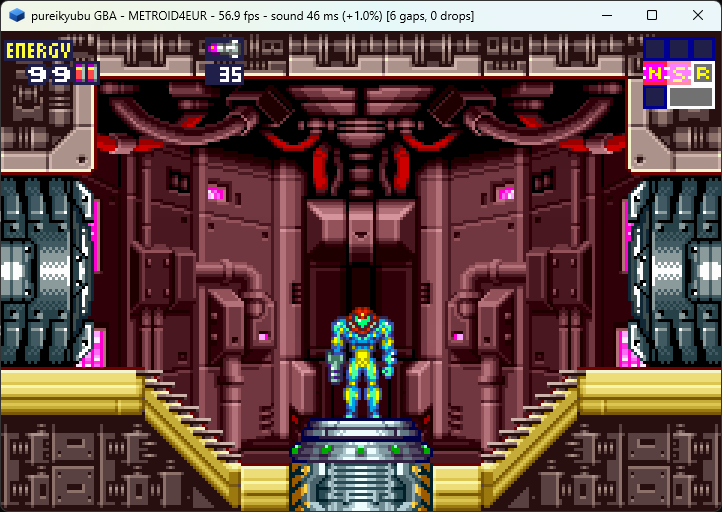
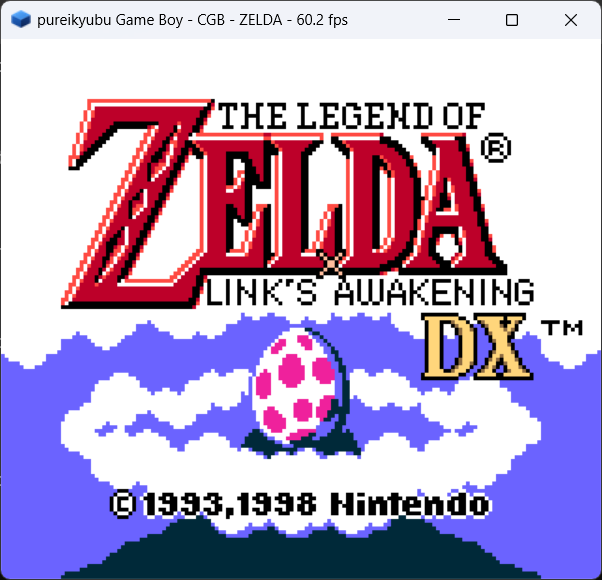
- An integrated Game Boy Advance and Game Boy.
src/gbais a second machine written from the public hardware specifications (the ARM Architecture Reference Manual for the ARM7TDMI, GBATEK for the GBA peripherals, the Pan Docs for the Game Boy). It has its own free boot ROM whose animation draws the pureikyubu logo, its own SDL2 front end and its own test harness;pureikyubu --gba game.gbaruns a cartridge andpureikyubu game.gbcruns the Game Boy machine inside it. It exists to be a GBA Link peer and a Game Boy Player stand-in for the GameCube side. - A software GFX pipeline. The Flipper graphics blocks (XF, SU, RAS, TX, TEV
and PE) now have a CPU implementation next to the OpenGL one. It draws into a real EFB memory
array and a real TMEM, and the copy engine turns the finished frame into the XFB the video
interface scans out — no OpenGL context at all.
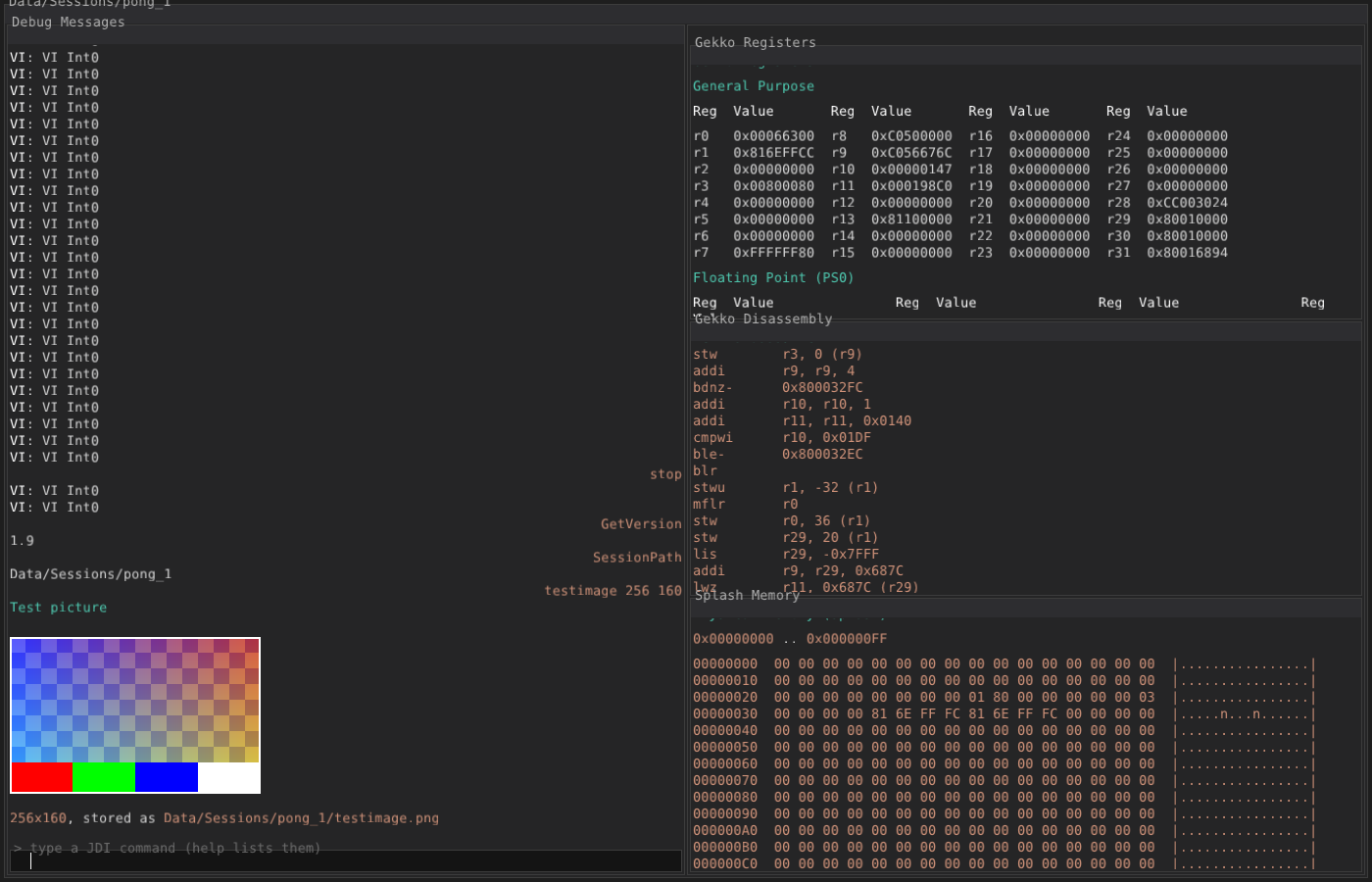
hardware.GFX_PIPELINEand thegxpipelinecommand switch pipelines on the fly. - A new debugger (DebugUI2). Its own thread, its own OpenGL 3.3 window and a
session folder per run; every panel is the Markdown of a JDI command, so the whole Flipper —
thirteen tabs from Gekko to the profiler — and both portable machines are inspectable in
place.
Debug → Test New Debuggeropens it,F2starts and stops a session. - An MCP server.
pureikyubu --mcpruns the emulator as a local Model Context Protocol server: every command of the debug interface becomes a tool an LLM agent can call (~150 before a machine is loaded, ~170 after), over stdin/stdout JSON-RPC. - A hardware-interface profiler. The status bar could say how fast the CPU runs; the profiler says whether the data moves at all, and where: the 60x bus, the Flipper/Splash bus, the PI and CP FIFOs, the write-gather buffer, every DMA engine, the audio mixer input, the GFX primitives, the VI frames — per emulated second.
- A headless build.
uinull.cppand a null GFX layer make the emulator a windowless console application for benchmarks, test sweeps and the MCP server; the Visual Studio headless target also draws with a real OpenGL context on a hidden window, so frames can still be read back. - A DSP recompiler. The DSP core got a basic-block compiler that shares the common x86-64 emitter with the Gekko one; it is 1.5–1.8x faster than the interpreter and off by default.
- A security review and a UTF-8 pass. About ninety defects reachable from the
artifacts the emulator loads were found and fixed behind a small verifier layer,
--selftestreports a startup failure instead of disappearing, and the debug interface, the console and both front ends speak UTF-8. - Compatibility. Metroid Prime's intro FMV went from ~3.5 to ~9–11 frames a second and the run reaches the title screen inside 100 seconds; Super Mario Sunshine boots and plays its intro; Super Monkey Ball 2 stops spinning before its first frame; Star Wars Rogue Squadron III no longer faults while its MMU handler maps the page; Prince of Persia's memory card dialog is readable.
Added
The integrated Game Boy Advance and Game Boy (issue #388)
- A second machine in
src/gba, written from the public specifications and independent of the GameCube side. The Game Boy Advance core implements the ARM7TDMI (ARM and Thumb, all seven modes, the exceptions andHALT), the memory map with the open bus and theWAITCNTwaitstates, the LCD (tile modes 0–2, bitmap modes 3–5, sprites, windows, mosaic, blending, forced blank), the four timers, the four DMA channels including the sound-FIFO and video-capture timings, the keypad, the interrupt controller, the sound (the four legacy channels and the two direct-sound FIFOs), the serial port with an emulated link cable, the cartridge (ROM plus SRAM, Flash and EEPROM saves and the GPIO/RTC port) and the BIOS service functions in the host. - A free boot ROM, because the official IPL is copyrighted: the boot animation is emulated ARM
code assembled at run time by a small emitter (
src/gba/gba_armasm.cpp). A wireframe hypercube collapses into the pureikyubu cube mark while the wordmark scrolls in, and the boot ROM then hands the machine to the cartridge the way the real BIOS does; the image and its assembly listing can be dumped withgba_bench --dump-bootrom bootrom.bin. - The Game Boy machine the GBA carries inside it (
src/gba/gb_*.cpp): the LR35902, the DMG/CGB LCD with the CGB palettes, VRAM banks and attribute map, the four sound channels and the MBC1/2/3/5 mappers with battery saves, with its own 256-byte boot ROM. - The modes:
pureikyubu --gba game.gba,pureikyubu --gba(no cartridge — the boot ROM's SIO link driver, i.e. the "GBA Link" state),pureikyubu game.gbc,--gba-bios bios.binfor a real BIOS image and--no-gba-bootromto skip the BIOS. The window, the sound and the input come from SDL2, and the bindings live inData/GBASettings.json. - A harness of its own (
testing/gba_bench), because the core has no SDL, OpenGL or ImGui dependency: unit tests, a headless ROM runner with per-frame hashes and PNG dumps, a speed measurement and a link test that plugs two instances into each other. The public MIT test ROMs (jsmolka/gba-tests) run through it — the memory, ARM and Thumb suites report "All tests passed", and they found the VRAM mirroring, the byte-store rules of the video memory and the register-shift-by-zero carry rule. The suite is at 263 tests and all of them pass. - The GBA and GB cores are debugged from the host like everything else:
gba,gbaregs,gbacpu,gbamem,gbappu,gbadma,gbtimers,gbsio,gbcartand thegb*equivalents are JDI commands, and DebugUI2 builds its panels for both machines.
The software GFX pipeline (issue #384)
- A complete CPU implementation of the Flipper graphics blocks in the same modules as the
shader backend, with the software methods carrying a
Softprefix: the transform unit (the matrix multiplies, the projection combine, per-vertex lighting, texture-coordinate generation, the guard-band clipper and the divide plus viewport mapping into window space), the setup unit (primitive assembly, edge coefficients, interpolation planes, culling, zfreeze), the rasterizers (the 2×2-pixel quad grid with a 12-bit coverage mask per quad, the top-left rule, the scissor and perspective-correct interpolation), the texture unit (a real TMEM, the load commands, a tag cache, the LOD computation and the point, bilinear and trilinear filters over every texel format), the TEV (16 combine stages, the Rev-B K constants, alpha compare, the Z-texture environment, fog and the final alpha function) and the pixel engine (a real EFB memory array, the Z test, blending, logic ops, write masks and the copy engine). - The pipeline is a configuration variable (
hardware.GFX_PIPELINE, 0 = shader, 1 = software) and can be switched at run time withgxpipeline soft/gxpipeline shader; the choice is stored in the settings. The two paths share no rendering state. - Indirect (bump) texturing is implemented in the software TEV with the same arithmetic as the shader backend, so the two pipelines produce the same picture.
testing/gfx_soft_test.cppdrives the pipeline through the hardware API only — the XF and BP register spaces and object-space vertices — and reads the result out of the EFB memory and the XFB. The DolphinSDK sweep renders the same 87 demos through it andreport.pyputs the two pipelines side by side. The pipeline stays experimental (see the page): a few titles still have picture defects, and the default remains the shader backend.
The new debugger — DebugUI2 (issues #371, #397, #407)
- A debugger that runs in its own thread and talks to the emulated machine only through JDI
and the Debug API; the window is a separate SDL window drawn with OpenGL 3.3 and a glyph atlas
rasterized out of
Data/DebugUiMono.ttf. - A session per run (
Data/Sessions/<image>_<ordinal>, a JDI entity of its own). Every panel is the Markdown answer of a command, so the message history, the command line and a snapshot of the emulated state can be reviewed offline. - The GameCube session has thirteen tabs: Gekko, the three processor panels (registers,
disassembly, memory), the nine Flipper subsystems and the profiler. The subsystem reports are
one command per block —
airegs,viregs,piregs,miregs,diregs,siregs,exiregs,cpregsanddspstate— each answering the decoded state of its block. - A portable session (GBA and Game Boy) is its own front end:
F2starts and stops it, the panels come from thegba*/gb*commands, and an MCP client that launchedpureikyubu --gbagets the portable commands rather than the GameCube ones. - Focus, scrollbars and tabs: the panel under the pointer takes the focus, wheels and scrolls,
a panel whose content does not fit gets a draggable scrollbar, and the tab strip selects
between stacked sub-panels. Fixed along the way:
DrawTextplaced every line an ascent too high, the performance counters crashed the debugger when it was opened with no machine loaded, and the scroll and tab state now survives the snapshots.
The MCP server (issue #383)
pureikyubu --mcppublishes the whole debug interface as MCP tools over stdin/stdout (one JSON-RPC 2.0 message per line). The client starts the emulator as its own child process, so there is no port, no listener and no authentication. See the page.- The tools are not a second interface:
src/mcp.cppbuilds the tool table from thecanrecords of the registered nodes, so a command added to the emulator appears in the tool list by itself. Every tool carries the help text, the usage and the arguments of its command; a failing command is reported as a failed tool so the model can correct itself. mcp 0/mcp 1start and stop the server from the debugger console, andMcpRequest <json>drives the whole protocol as one command, which is how it is tested without a transport. The answers are capped at 4 MB so a command likeFileLoadcannot push a binary into the model's context.
The hardware-interface profiler (issue #394)
src/hwprof.*watches the console's information-exchange channels and reports what each one carried per emulated second: the 60x bus, the Flipper/Splash bus, the PI interrupt assertions, the write-gather buffer, the PI→CP command FIFO, the audio mixer input, the EXI/DI/DSP/AI/ARAM DMA engines, the GFX primitives and vertices, the VI frames and the instructions the two cores retired. Seewiki/hwprof.md.- The window is one emulated second rather than a wall-clock one, so a channel that moves 4 MB per console frame reports the same rate whether the host runs at 0.2x or at 5x. The instruction counters are the ones the cores already keep, so nothing is added to the Gekko hot path; a DSP paired instruction counts as one.
- Three presentations: the
hwprofileMarkdown table, thehwprofile imagePNG next to the session and thehwprofile osdoverlay in the emulated picture (hwsod 1, stored asHW_OSD, off by default). The overlay asks the debug interface for the report and hands the rasterized picture to whichever back end presents the frame. - DebugUI2 gets a Profiler tab next to Registers, Disassembly and Memory.
The headless build (issue #382)
uinull.cpp(the repurposeduisimple.cpp) is the entry point and the whole UI of a console build with no window: a bare image or--iplruns until Ctrl+C,--bench <file> [sec]is a first-class headless mode, and the reports are echoed to the console.- The measurement loop moved out of the SDL front end into
bench.cpp/bench.h, so both front ends measure with the same code and the wall clock isstd::chrono. gfxnull.*runs the GFX pipeline against a null GL layer underGFX_NULL, so the emulation is untouched while nothing is drawn and no driver is needed. The Visual Studio headless target definesGFX_OFFSCREENinstead and draws with a real OpenGL context on a window that is never shown, into a framebuffer of its own, soGFX_DUMP/GFX_EFB_DUMP/gxshotstill produce frames; the Linux CMakeHEADLESStarget keeps the null backend.scripts/VS2026/pureikyubu_headless.vcxprojis part of the solution but is not built by "Build Solution";cmake -DHEADLESS=ON ..builds the same target on Linux. The null back ends (audionull.cpp,cuinull.cpp,padnull.cpp) were brought back to the current interfaces.
The DSP recompiler (issue #375)
src/dspjit.*compiles straight-line runs of DSP instruction words into x86-64. The semantics are not reimplemented: a word becomes one direct call (two for a parallel word) to the very handler the interpreter'sDispatchcalls, so the decoder and the dispatch switch run once per block, at compile time. The emitter is shared with the Gekko recompiler (src/jit_x64.h).- Blocks re-check the halfwords they were built from on every entry and leave as soon as the
code generation changes, an interrupt is pending or a breakpoint is armed; invalidation hooks
cover
HardReset,LoadIrom/LoadDromand the DSP-DMA paths.Dsp16::DoDmacopied a 16-bit block size blindly and overran the DSP memory arrays (AddressSanitizer found it); the transfer is clipped now. - The recompiler is 1.5–1.8x faster than the interpreter and off by default:
--dspjit, ordspjit 1in the debugger.testing/dsp_jit_test.cppchecks it differentially against the interpreter, including an exhaustive sweep of all 65536 instruction words (twice), the DSP-DMA microcode upload, an interrupt round trip and the block cache being dropped when the stream changes.
The UTF-8 pass (issue #372)
- The narrow string of the project is UTF-8 — the JDI command line and its arguments, the Json
documents, the reports and both front ends — while the emulator's own text stays
wchar_t.Util::WstringToStringandUtil::StringToWstringare real converters now, including the surrogate pairs of the code points outside the BMP, and a byte sequence that is not valid UTF-8 is carried through instead of being dropped. - The tokenizer skips the byte order mark a script may start with; Json keeps member names as
UTF-8 (a non-ASCII key used to be truncated to one byte per character);
Util::FileOpenis_wfopen_son Windows andfopenof the UTF-8 name elsewhere, so a file name outside the ANSI code page travels through the interface in one piece. - The console reads and writes wide characters (
ReadConsoleInputW/WriteConsoleOutputWon Win32,SDL_TEXTINPUTin the SDL build), and the command line moves the cursor, the deletion and the word search by code point. DebugUI2 decodes a panel's text and the command line into code points as well. The sources are UTF-8 without a BOM and the MSVC projects pass/utf-8.
Input verification and the security review (issue #381)
- Every artifact the emulator reads from the outside world was audited — the settings JSON,
the Bootrom and DSP ROM images, the
.dol/.elfexecutables, the.iso/.gcm/.rvzdisc images, the memory card saves, the command line, the guest's device registers and DMA engines, the console scripts and the.mapsymbol files — and about ninety defects were found and fixed. The recurring shape was a bound that existed only asassert(), which the Release configurations compile out. The full report is on the security page. - The checks that repeat are one layer now (
src/verify.h): the overflow-safe range test and the rules for a main-memory window, an image section, a disc read, an FST entry, a memory card transfer and a console script line. The memory interface gained length-aware accessors next to the start-only ones, so a block copy can no longer begin inside RAM and end outside it. --selftestruns the whole startup sequence without a window and exits with the number of failed steps, andtesting/startup_cases.shruns it against deliberately broken settings files and random files renamed to.doland.rvz.testing/security_test.cpppins every rule down, including two property tests.
Tooling: the DolphinSDK demo sweep (issue #385)
DVD::MountSdkbuilds a whole GameCube disc image in memory from a DolphinSDK folder, so the SDK's demos can be read through an FST as if they were on a disc (File → Mount DolphinSDK as DVD…, orMountSDK <path>inautoexec.cmd).testing/dolphinsdkholds the sweep methodology and its scripts:sweep.ps1runs a list of demos and captures the video window,summarize.pyturns a sweep folder into a table andreport.pybuilds an HTML report with both GFX pipelines side by side. The 87 GX demos were run and the bugs they exposed were fixed.
Changed
Gekko and the command processor
- The recompiler translates the halfword loads (
lhz/lhzu/lhzx/lhzuxandlha/lhau/lhax/lhaux) through aJitReadHalftrampoline. Falling back to the interpreter drops from 13.11% to 3.89% of the instructions and the same 100-second Metroid Prime run goes from 289 to ~301 seconds of emulated time (103.1 to ~107 MIPS). Corrected on the way: the effective address of every indexed form is(RA|0), notRA. - A branch condition is emitted inline for the forms a compiler actually emits (a CR test or a CTR decrement), and a conditional branch no longer ends the block: the taken path leaves through the branch epilogue and the fall-through is compiled with the block, so a block covers the whole loop body. Blocks run per second more than halve and the same run reaches 131.8 MIPS and 11.64 instructions per block (was 103.1 and 4.47).
- Address-translation events no longer drop the block cache. A block bakes in the instruction
stream it was compiled from, and the lookup already compares the physical address it was
compiled for with the one the current
MSR/BAT/SDR1/TLB state produces, soException,rfi,mtmsrand themtsprofSDR1/the BATs/HID0no longer callInvalidateAll. Metroid Prime's intro goes from 131.8 to 181–191 MIPS, from 26.8M translations in 100 seconds to 17K, and from ~5.7 to ~9–11 frames a second; the run now reaches the title screen inside the 100 seconds. - The CP's read unit follows the emulated time base instead of guessing at the host
scheduler's progress, and the
WPARtimeout it never had on the real Gekko is gone. A FIFO repoint (GXSetGPFifo) keeps the entries the emulated reader has not fetched yet, which removes the intermittent boot failure of Metroid Prime's intro. The read unit reports its idle state from the ring's current state rather than as a side effect of the last fetch, which is what Super Monkey Ball 2 was spinning on. A draw command waits for all of its vertex data (the 16-bit vertex count was truncated to eight bits), the stream buffer is sized for the largest command a title can issue, and the newcpfifocommand dumps the CP FIFO registers.
Timing units
- The time base counts the Gekko clock (486 MHz), so a tick is one instruction and the decrementer steps by one; the old two-tick counter was a slow-down hack from the interpreter days.
- The DSP runs at 81 MHz — one instruction per six time base ticks — so its anchor is a plain tick count and its batch is measured in instructions. Fixing the units is what removed the Star Wars Rogue Squadron III instruction-storage fault raised while its MMU handler was still mapping the page.
Build and layout
- The GBA is a project of its own: a
GBAstatic library the emulator links the way it links SDL2, plus thegba_benchconsole target. The portable debug interface (gba_debug.cpp) sits next to the SDL front end, which is the only file of the module that speaks JDI. scripts/VS2026/pureikyubu_headless.vcxprojand the CMakeHEADLESSoption build the windowless target;src/jdispecs.cppholds the JSON specifications of every JDI node in one place.
Fixed
Graphics
- The EFB texture copy (issue #378). The copy engine's texture copy was missing entirely, so every title that renders through the EFB drew from textures that stayed zeroed. The rectangle is re-packed into the destination format, the tile rows follow the destination stride, and the copy destination's own 4-bit format set (and the alpha plane the single-channel formats need) is used.
- A copy's clear belongs to the copy. A texture copy clears the rectangle it read; a display copy clears the whole colour buffer at the frame begin. A title that renders its frame in several passes through the copy engine (Metroid Prime) used to lose every pass drawn before a clear.
- TEV texture bindings. A
RAS1_TREFword binds a pair of TEV stages and its halves are consumed by the enabled stages in order, not by a fixed half per stage parity. This is what turned every string of Prince of Persia's memory card dialog into a white bar. - Indexed XF block loads.
GXLoadPosMtxIndxand friends read guest (big-endian) words out of an index array; the bytes were handed to the XF as they sat in memory, so every matrix loaded that way was garbage. The cartoon-outline demo's whole model was invisible. - Shader pipeline depth. The GL backend's own frame-begin clear took its
depth from
PE_COPY_CLEAR_Z, which is still 0 on the first frame, so the whole first frame failed the depth compare and the indirect bump demos lost their light map. The GX clip-space z is now mapped onto GL's clip volume (z' = 2z + w) instead of being handed over raw, so the programmed viewport depth range matches GL and geometry on the near plane is not dropped. - Lighting and fog. The vertex shader negated the light direction in the
spotlight attenuation, so every lit spot surface came out black (the software pipeline had the
same bug). The perspective fog now looks up
2^24 / (b_mag - (z >> b_shf)), the reciprocal of a fraction of the depth range rather than1 / b, so exponential and linear fog actually fade. - PE bounding box (issue #385).
PE_XBOUND/PE_YBOUNDand the CPU-visible read-backs were never extended from the drawn geometry; the box is extended once per primitive with the window extent of the vertices. - Video interface. The blitter assumed a fixed 640×480 picture instead of
decoding
VI_VERT_TIMING, so a title that copies 448 visible lines showed stale memory below them; the active lines are scaled over the window now, and interlaced modes carry half the height per field. The YUV→RGB conversion put red and blue in the wrong bytes of the output word (theRGBthe VI produces is in (Blue, Green, Red) order, and the XFB chroma of a pixel pair isY0 U0 Y1 V0). - The software pipeline's primitives. The line and point emitters built their quad by moving the window X/Y, which the clipper recomputes from the clip position, so lines and points could not be drawn at all; the offsets are formed in window space and carried into the clip position, and the point size is floored at one pixel. The clipper cut a hair in front of the near plane and threw away every primitive that lies exactly on it — the plane is inclusive on the hardware.
- Other GFX fixes. The light-map render's scissor rectangle is handled; a
draw-sync token is a synchronisation marker rather than a frame boundary;
GXSetGPFifois atomic with respect to the reader so a repoint cannot tear a command; the TEV register file keeps the 11-bit signed stage result (the wide alpha); the pixel engine's display copy clears the whole colour buffer while a texture copy clears its own rectangle.
CPU, DSP and interrupts
- Cache management on direct-store segments (issue #300).
dcbf,dcbstanddcbztook the DSI of a direct-store segment, which is for loads and stores, not for cache maintenance. Super Mario Sunshine hung in the SDK's__OSInitMemoryProtectioninsideDCFlushRange; with the fix it boots, plays its intro FMV and reaches the scene after it (~870 finished GX frames and 160M Gekko instructions in the first 45 emulated seconds, where the machine used to stop 0.3 s in). - The DSP
waitstate.waitleft the program counter on the instruction, so an interrupt handler'sretireturned to the same wait and the code after it never ran. A wait now ends when the interrupt it waited for arrives. Found with Super Mario Sunshine, whose audio microcode parked on a wait after answering the CPU: with the fix the phase after the intro runs at ~0.8x real time instead of ~0.1x. - The Linux thread port.
Thread::Suspend()called from the worker itself deadlocked on the non-recursive pthread mutex (the AI thread parks itself exactly that way),DduCore's DVD-audio thread looped inside itself and could never be suspended, and the ringleader calledpthread_yield()once per basic block. Super Mario Sunshine ran at 3.7 MIPS with it and 81.9 MIPS without; a thread that has to wait now parks on the condition variable or blocks in its device. - The DSP-DMA copy is clipped to the region it starts in, and the AX DirectSound backend runs without a sound device instead of asserting.
Games
- Metroid Prime. The intro FMV runs about three times faster than in 1.8 and the run reaches the title screen. The remaining gap to full speed is the game's AX audio driver, which is a large share of the retired instructions.
- Super Mario Sunshine. Boots, plays its intro FMV and reaches the scene after it. The title screen that follows is still not drawn; that hang is a separate finding.
- Super Monkey Ball 2. Showed no picture at all because it waited for the CP's FIFO read-idle bit, which the emulator never set; it now reaches ~371 finished frames in 15 seconds.
- Star Wars Rogue Squadron III. No longer faults on an instruction page while its MMU handler maps the page.
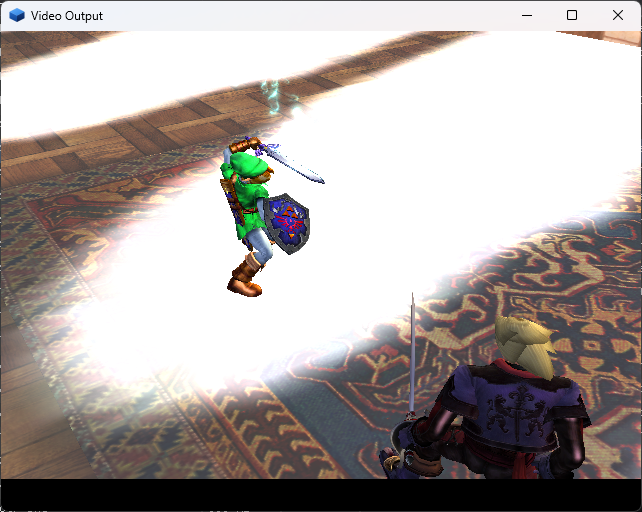
- Soul Calibur II. Renders its scene through the shader pipeline.
Known issues
- The integrated GBA is not complete: the JOY bus (a GameCube controller on the link port) and
the Game Boy Player's own boot protocol are not implemented, the official BIOS runs its boot
but its picture does not appear (the emulator's own boot ROM is what boots cartridges today),
and a real Game Boy Color cartridge's picture is still work in progress. The full list is in
testing/gba_bench/Readme.md. - The software GFX pipeline is experimental: anisotropic filtering, the
round/field_predictmotion-compensation modes, the anti-aliased EFB, EFB pixel types other than RGB8, the display copy's vertical filter and the YUV/4:2:0 modes, and the EFB CPU window (Cpu2Efb) are not implemented; the default remains the shader backend. - Bump mapping on the shader backend, the Z-texture environment in some paths, PE dither and a
few
SUflag fields are still deliberately unimplemented and documented inwiki/gfx.md. - Full JAudio microcode support (issue #71) is still in progress; the remaining DSP
divergences from the hardware are recorded in
testing/Readme.md. - The DSP recompiler is experimental and off by default. The Gekko recompiler needs a 64-bit x86 host; 32-bit and non-x86 builds fall back to the interpreter.
- The Linux build still has no sound and no input, and the Linux headless target has no OpenGL offscreen backend (the Visual Studio one does).
- RVZ support is read-only: bzip2/LZMA groups and Wii images are not implemented.
- The
CpSpecgroup of the native test suite hangs when two of its cases run in one process (each passes alone); the native suite is otherwise at 510 tests. - Some titles still fail to render or hang; compatibility is a work in progress.
Up next
Release 2.0 will be the next major version, the peripheral release: it is aimed at the emulation of the console's peripheral devices — the EXI bus and the devices on it (memory cards, the Broadband Adapter, the RTC), the serial interface and the pads, the disk interface and the drive, and the link port the GBA side already has — and it should close out many of the emulator's features, so that the list of "not implemented yet" above shrinks to what genuinely does not matter.
After that the project moves into its steady state: planned, methodical improvement — performance work and bug fixing release after release, rather than another feature push. The architecture is in place; what remains is making what is there faster, more exact and more complete.
Building
Windows. Open scripts/VS2026/pureikyubu.sln in Visual Studio 2026
and build. SDL and Win32 front ends both have Debug and Release configurations; the
GBA library, gba_bench and the pureikyubu_headless target
are part of the solution (the headless target is not built by "Build Solution").
Linux.
sudo apt install libglew-dev
git clone https://github.com/emu-russia/pureikyubu.git
cd pureikyubu
git submodule update --init
cd build && cmake .. && make
./pureikyubu pong.dol
Tests.
MSBuild scripts/VS2026/pureikyubu_test.slnx -p:Configuration=Release -p:Platform=x64
vstest.console.exe scripts/VS2026/x64/Release/pureikyubu_test.dll /Platform:x64
The portable machines have their own harness:
testing/gba_bench/check.shThe previous releases are still available: Release Notes 2.0 · Release Notes 2.0 · Release Notes 1.8 · Заметки о релизе 1.8 · Release Notes 1.7. The long story of the work after release 1.6 is in the digest.